Simple steps: how Jason Strong achieved a three-fold productivity increase
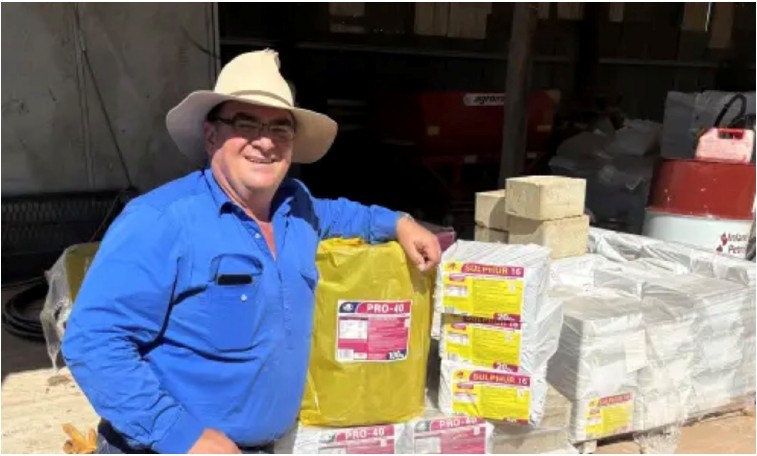
Maximising the value of available pasture has driven a remarkable three-fold increase in productivity for high profile beef industry identity Jason Strong.
Delivered by a shift to rotational grazing, the use of targeted nutrition and an upgraded water supply, Jason Strong and his family have seen a major lift in terms of carrying capacity and the kilograms of beef produced on the family’s 400 hectare (1000 acre) property located west of Gunnedah in North West NSW.
Anthropogenic climate change is expected to have major impacts on domesticated livestock, including increased heat stress in animals in both intensive and extensive livestock systems. We estimate the changes in the number of extreme heat stress days per year for animals raised outdoors that can be expected in the major domesticated animal species (cattle, sheep, goats, poultry, and pigs) across the globe during this century. We used the temperature humidity index as a proxy for heat stress, calculated using temperature and relative humidity data collated from an ensemble of CMIP6 climate model output for mid and end century. We estimate changes in the proportions of different livestock species that may be at increased risk of extreme heat stress under two contrasting greenhouse gas emission scenarios. Results are discussed in relation to changes in the suitability of different climate conditions for domesticated livestock during the current century. We find that by end century, extreme heat stress risk is projected to increase for all livestock species in many parts of the tropics and some of the temperate zones, and to become climatically more widespread, compared to 2000. Although adaptation options exist for both intensive and extensive livestock production systems, the increasing pervasiveness of extreme heat stress risk in the future will seriously challenge the viability of outdoor livestock keeping, particularly in the lower latitudes in lower and middle-income countries where the costs of adaptation may be challenging to address.